I’ve made thousands of pounds betting on horse racing over the years.
But here’s something that might surprise you.
I know very little about horse racing.
I couldn’t tell you much about the best trainers, jockeys or which horses are suited to particular courses. I don’t spend hours studying form guides, and I certainly wouldn’t consider myself a horse racing expert.
Yet I’ve managed to make a profit from the sport using several different strategies.

How?
Because my approach to sports betting has always been about one thing: finding value in the betting markets.
It doesn’t matter whether I’m betting on football, UFC or horse racing. If I can consistently find odds that are bigger than they should be, I have an opportunity to make money in the long run.
In this article, I’m going to explain three different methods I’ve used to approach horse racing betting.
Some require a fair amount of knowledge and experience, while others are incredibly straightforward and can be followed by complete beginners.
I’ll also explain the advantages, disadvantages and limitations of each method.
1. Reading the Betfair Markets – My Favourite Horse Racing Strategy
Best for: Experienced bettors who want to avoid bookmaker restrictions.
The first strategy is probably my favourite, but it’s also the most difficult to learn.
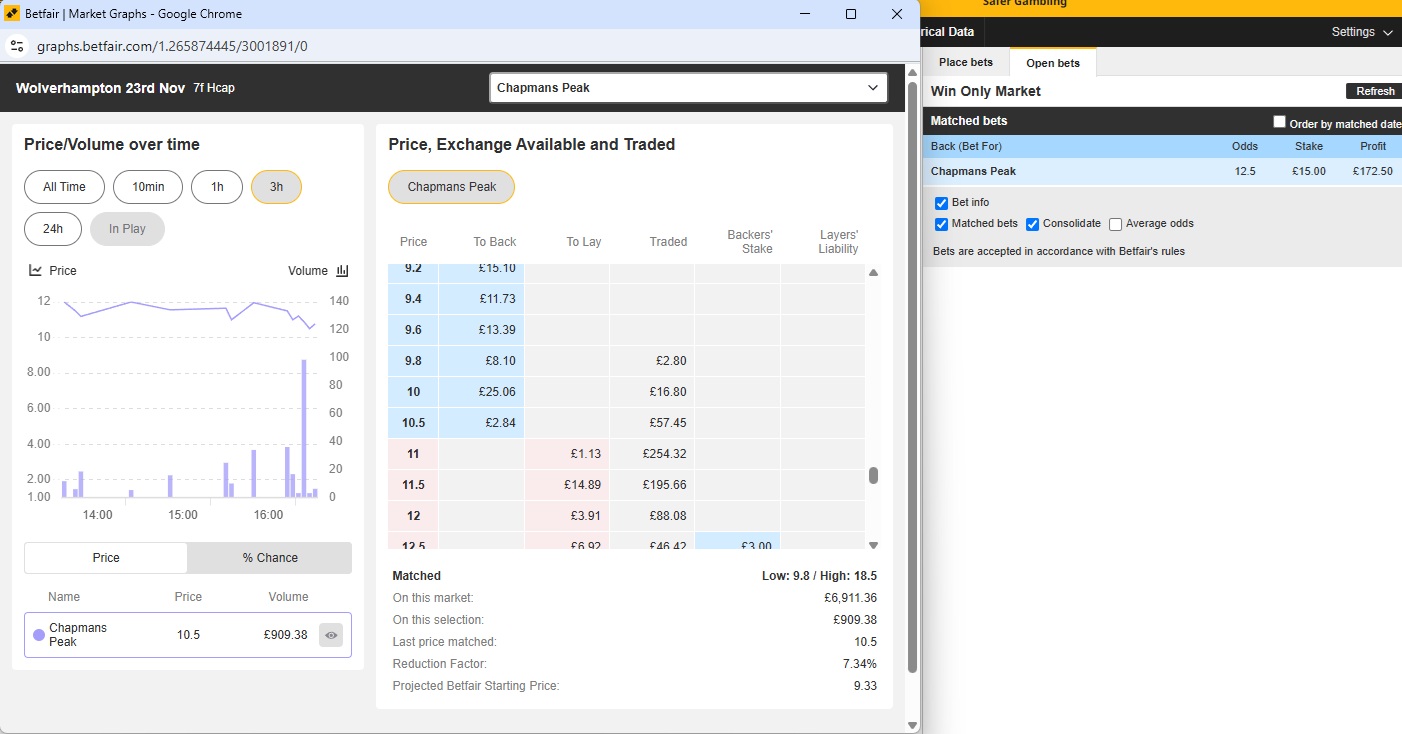
It involves studying betting market movements on Betfair and identifying horses whose odds suggest that informed money may be entering the market.
One of the things I’ve learned from years of sports betting is that the betting markets themselves can provide valuable information.
Rather than trying to work out which horse should win a race, I’m interested in what the money is doing.
For example, imagine a horse is trading at odds of 12.00 early in the morning.
Over the next few hours, significant money begins to appear on that horse, and the odds shorten to 9.00.
That’s an interesting movement.
It doesn’t automatically mean the horse will win, and not every shortening price represents a profitable betting opportunity.
However, certain patterns of market activity can suggest that the original odds were too generous.
My approach involves identifying these situations and attempting to back horses at prices that offer value, if I am very confident I will sometimes trade the odds (as shown in the video)
Why I Like This Strategy
The biggest advantage is that I can use the Betfair Exchange.
Anyone who has followed my Making a Million Betting Challenge will know that bookmaker restrictions have been one of the biggest obstacles I’ve faced.
When you’re consistently finding value with traditional bookmakers, your accounts are likely to get restricted eventually.
Betting exchanges operate differently.
You’re betting against other customers rather than the bookmaker, meaning you don’t face the same type of profitability-based account restrictions.
This makes exchange betting a much more sustainable option for someone who wants to continue betting over the long term.
There are still limitations, including liquidity, commission and the amount of money available at your desired odds.
But it’s a huge advantage compared with relying entirely on traditional bookmakers.
My Results From Reading Horse Racing Markets (Betting Only)
This is where I’ll share some of my actual results.
I’ve been tracking the performance of this approach over an extended period, and the results have taught me a lot about the importance of patience.
There have been profitable periods, but also long stretches where the strategy has barely moved forward.
One particularly frustrating period saw the strategy remain around breakeven for months.
That’s something people often underestimate about value betting.
Even if you have a genuine edge, it doesn’t mean you’ll make a profit every week or even every month.
I also monitor how my selections perform against the Betfair Starting Price (BSP).
If I’m consistently taking odds that are bigger than BSP, that’s encouraging evidence that I’m identifying value, although it isn’t proof of profitability on its own.
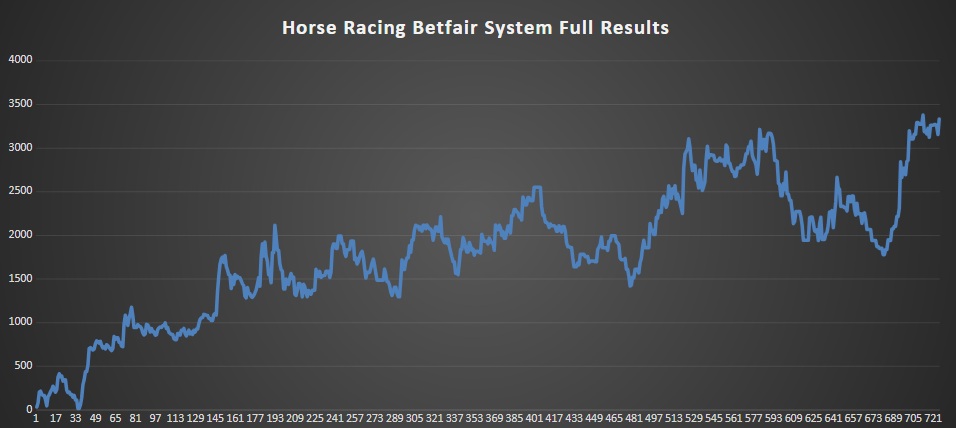
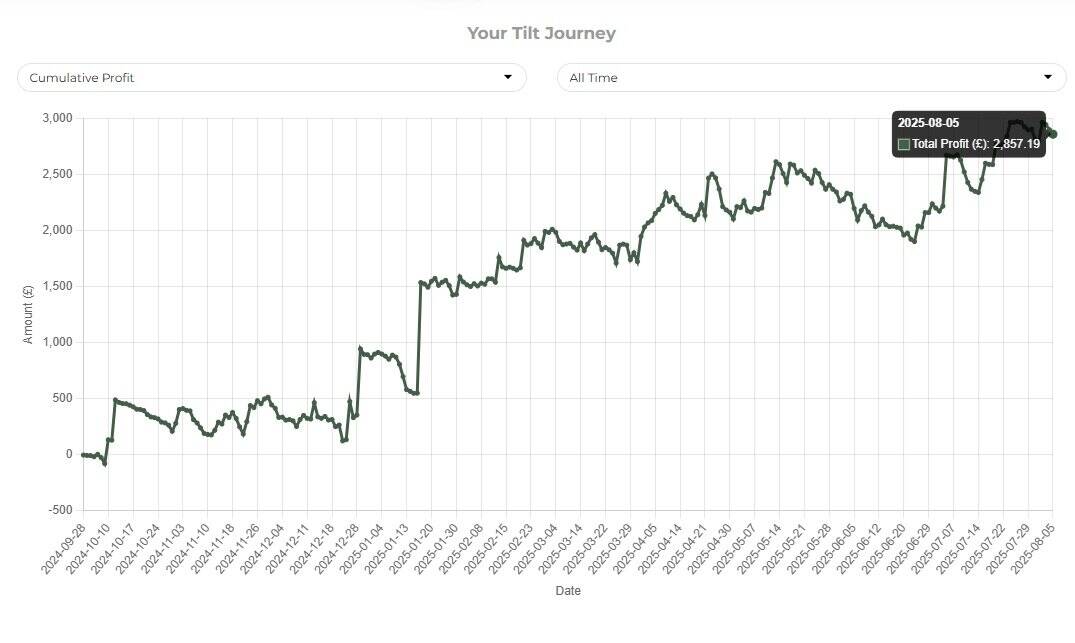
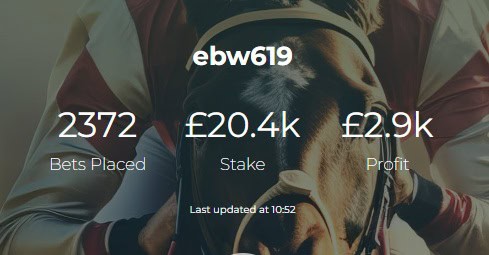
The graph above shows a system using starting at £2 – £5 stakes , (now at £10 – £20 stakes) over a period of 730 days.
This system is based purely on beating the Betfair SP.
The Downsides
The main disadvantage is the learning curve.
Understanding horse racing market movements takes time, and there are plenty of situations where the market can be misleading.
A horse shortening in price doesn’t automatically make it a good bet.
You also need to understand liquidity, timing and the difference between genuine market support and movements caused by relatively small amounts of money.
I’ve spent a considerable amount of time testing different approaches, and not everything I’ve tried has worked.
It’s certainly not a strategy I’d recommend to somebody looking for an easy way to start betting on horses tomorrow.
Pros:
- No traditional bookmaker profitability restrictions.
- Can be used entirely on betting exchanges.
- Doesn’t require detailed knowledge of horses or racing form.
- Potentially sustainable over the long term.
Cons:
- Difficult to learn.
- Requires time studying and monitoring markets.
- Some markets have limited liquidity.
- Long losing or breakeven periods are possible.
2. Tilt The Odds – Using Software to Find Value Bets
Best for: Beginners and intermediate bettors who want software to identify selections.
The second strategy is considerably easier to follow.
Rather than spending hours studying Betfair market movements myself, I can use software that does much of the analysis automatically.
The software I’m talking about is Tilt The Odds.
I’ve tested a lot of sports betting software over the years, and Tilt The Odds has been one of the more interesting products I’ve used for horse racing.
The basic idea is simple.
The software analyses betting markets and identifies selections where it believes bookmakers are offering odds that represent value.
It uses a combination of factors, including exchange market activity and odds movements, to identify opportunities.
Once a selection meets its criteria, it appears in the software, and I can decide whether to place the bet.
I don’t need to know anything about the horse, trainer or jockey.
My job is simply to check the selection, make sure the available odds are acceptable and place the bet.

My Tilt The Odds Results
During my original three month test, I recorded the following results:
| Metric | Result |
|---|---|
| Bets placed | 1,077 |
| Total staked | £8,300 |
| Profit | +£1,422 |
| Return on investment | 17.1% |
Those were excellent results, especially considering how straightforward the software was to use.
Of course, three months is still a relatively short period when it comes to betting, and I wouldn’t expect a 17% ROI to continue indefinitely.
You can read the full breakdown, including my results by bet type, in my Tilt The Odds review.
Selections Throughout the Day
One feature I particularly like is that selections can appear throughout the day.
This means I’m not necessarily required to be sitting at my computer at a particular time every morning.
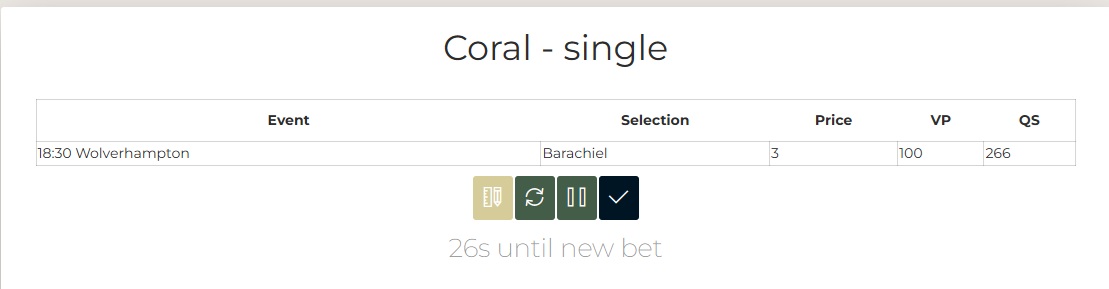
The software also supports different types of bets, including singles, doubles, patents and Lucky 15s.
Another useful feature is the Telegram integration, which makes it easier to receive selections when away from the computer.
Betting in Physical Shops
This is another significant advantage.
Although Tilt The Odds primarily identifies value with traditional bookmakers, some selections can also be placed in physical betting shops.
For somebody who has already had most of their online accounts restricted, this can provide additional opportunities.
Of course, betting shops have their own restrictions, and getting bets accepted isn’t always straightforward.
But having the option is useful.
The Biggest Problem With Tilt The Odds
The biggest disadvantage is bookmaker restrictions.
If you’re consistently taking value from traditional bookmakers, there’s a good chance you’ll eventually have your stakes reduced.
This isn’t a problem unique to Tilt The Odds. It’s something that affects virtually every successful value betting strategy involving traditional bookmakers.
And while you may be able to use exchanges for certain selections, the software is primarily designed around bookmaker prices.
Taking lower odds on an exchange can quickly eliminate what might have been a relatively small edge.
Pros:
- Very easy to learn and use.
- Doesn’t require horse racing knowledge.
- Selections appear throughout the day.
- Can be used in physical betting shops.
- Supports multiple bet types.
- Automatic results tracking.
Cons:
- Traditional bookmakers may restrict your accounts.
- Requires access to suitable bookmakers.
- Subscription costs reduce net profits.
- Available odds can change before you place a bet.
For anyone interested in trying this approach, my full Tilt The Odds review explains the software and includes my actual betting results.
3. Following Profitable Horse Racing Tipsters
Best for: People who want a simple approach with minimal research time.
The third strategy is probably the easiest of the three.
Rather than analysing the betting markets yourself or using software, you follow selections from somebody who specialises in horse racing.
Now, I know what some people are thinking.
Aren’t most betting tipsters useless?
There are certainly plenty of terrible tipsters around, and I’ve always been sceptical of anyone promising easy profits.
However, there are also tipsters with lengthy, independently tracked records.
The challenge is identifying those who might have a genuine edge rather than somebody who has simply enjoyed a lucky run.
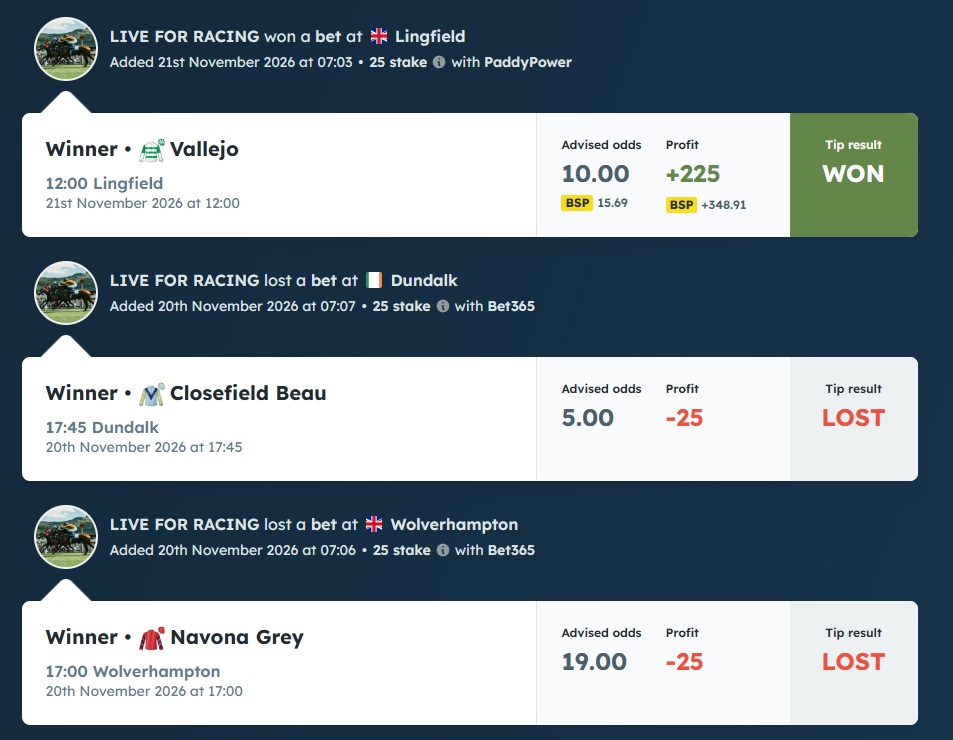
An Example: Live For Racing on Tipstrr
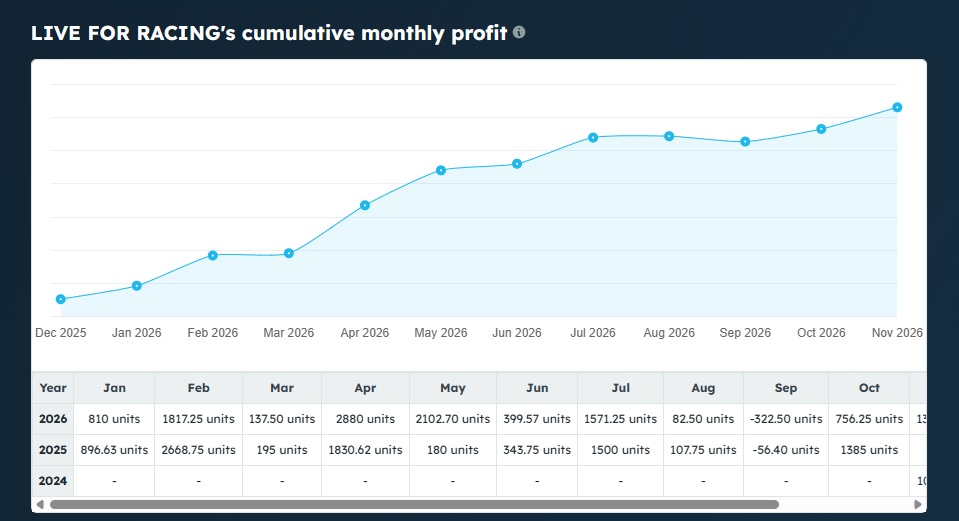
One example worth examining is Live For Racing on Tipstrr.
This is a horse racing tipster with results tracked on the Tipstrr platform since November 2024.
At the time of writing, the published historical record shows more than £10,000 in cumulative profit using the platform’s reported staking settings.
That’s certainly an interesting record with profits to both bookmakers and also betting at the Betfair SP.
However, it’s important to remember that these are the tipster’s published results, not my personal profits, and the figures depend on the staking method and odds recorded.
What interests me about this type of service is the simplicity.
I don’t need to spend hours studying horses.
The tipster does the research, publishes a selection and I decide whether I can obtain the recommended odds.
In theory, it’s one of the easiest ways to approach horse racing betting.
But there are a few important catches.
Getting the Recommended Odds
This is something I’ve encountered while conducting my own experiments following betting tipsters.
A tipster might recommend a horse at odds of 10.00, but by the time I see the selection, the best available price might be 8.00.
That’s a significant difference.
Even if the original bet represented good value, it doesn’t mean the lower price is worth taking.
Following a profitable tipster is not simply about backing every selection regardless of the available odds.
The odds you actually obtain are crucial to your long-term results.
This is particularly important with horse racing, where prices can move quickly and some markets have relatively limited liquidity.
Bookmaker Restrictions
Unfortunately, this method suffers from the same problem as using value betting software.
If the tipster consistently identifies value with traditional bookmakers, those bookmakers may eventually restrict your accounts.
You might be able to place some selections on betting exchanges, but there is no guarantee that the exchange odds will be good enough.
There is also the cost of the tipster’s subscription to consider.
A tipster can show an impressive historical profit, but if you’re betting relatively small stakes, subscription fees can eat into your returns.
Why I Wouldn’t Follow a Tipster Blindly
Even a tipster with a long profitable record can experience substantial drawdowns.
Horse racing tipsters who regularly select horses at bigger odds can go through extended losing runs.
It’s also important to check the number of selections, average odds, staking method and length of the track record.
A 30% ROI from 50 bets is much less convincing than a similar return over several thousand selections.
And even thousands of profitable selections don’t guarantee that an edge will continue.
Pros:
- Very simple to follow.
- Minimal horse racing knowledge required.
- Little time spent researching selections.
- Can benefit from someone else’s specialist knowledge.
Cons:
- Bookmaker accounts can get restricted quickly.
- Recommended odds may disappear.
- Subscription fees reduce profitability.
- Long losing runs are possible.
- Historical results don’t guarantee future profits.
Which Horse Racing Betting Strategy Is Best?
All three approaches have their advantages, but they’re aimed at different types of bettors.
| Strategy | Difficulty | Time required | Main drawback |
|---|---|---|---|
| Betfair market movements | High | High initially | Learning curve and liquidity |
| Tilt The Odds | Low | Low – Medium | Bookmaker restrictions |
| Horse racing tipsters | Low | Low | Restrictions and odds availability |
If you’re relatively new to value betting and still have access to traditional bookmakers, Tilt The Odds is probably the easiest place to start learning how software driven value betting works.
Following tipsters is another straightforward option, although I would spend time researching their historical results before paying for a subscription.
For somebody who has already been restricted by most bookmakers, the Betfair market movement strategy is much more appealing.
It’s more difficult to learn, but the ability to operate on the exchanges is a major long-term advantage.
Do You Really Need to Know About Horse Racing to Make Money?
Based on my own experience, no. Whilst it could helpful it isn’t a necessity.
But you do need to understand what you’re doing.
There’s a big difference between not knowing much about horse racing and not understanding betting.
I might not know much about the horses themselves, but I’ve spent years learning about odds, market movements, value betting and the importance of getting the best available price.
That’s where I believe my advantage comes from.
All three methods I’ve discussed rely on the same fundamental principle.
The aim isn’t simply to pick winners. It’s to find bets where the odds are bigger than the true probability suggests they should be.
Of course, finding genuine value is easier said than done.
There will be losing bets, losing months and periods where you question whether your strategy is working.
That’s why keeping accurate records, monitoring the odds you take and using a sensible betting bank are so important.
Final Thoughts
Horse racing has been an interesting addition to my sports betting over the years.
Despite having limited knowledge of the sport itself, I’ve been able to make money by approaching it from a completely different angle.
Rather than studying form and trying to predict winners, I’ve focused on identifying value through betting markets, software and specialist tipsters.
Of the three methods, reading the Betfair markets is my preferred long-term approach because it doesn’t rely on traditional bookmaker accounts.
However, it’s also the most difficult.
Tilt The Odds offers a much simpler way to identify selections, and my own testing produced some impressive results.
Following profitable tipsters is arguably simpler still, although getting the recommended odds and avoiding bookmaker restrictions can be major obstacles.
Whichever approach you choose, remember that none of these methods guarantees a profit.
Past results are useful evidence, but they’re not a promise of what will happen in the future.
And if there’s one lesson I’ve learned from years of sports betting, it’s that patience and getting the right odds matter far more than trying to win every bet.
Bet responsibly. Only stake money you can afford to lose, and never assume historical profits will continue.